

Imagine a world where flying cars zoom past your window, everyone glides around on jetpacks, and your automated home responds to your every whim. Sounds pretty futuristic, right? Yet, as we sit in our homes full of smart devices and still wait for the hoverboards and jetpacks of our dreams, it seems we’ve missed the mark on many predictions about the future. What went wrong? In this text, we’ll explore the most notable predictions from bygone eras, the roles of futurists, and what lessons we can learn from their ambitious, and often hilarious, foresights. Buckle up: it’s going to be a wild ride through time.
Notable Predictions From the 20th Century
The Jetpack Revolution: A Vision Unfulfilled
Picture this: the 1960s, a time of bold visions and dreams. Jetpacks were all the rage, with optimistic forecasts claiming that by the turn of the millennium, people would be soaring through the skies. While the concept sparked excitement, the jetpack revolution has yet to take off, literally. Instead of personal jetpacks, we got backpacks and aching shoulders. The technology has a long way to go, and even though some advancements, it remains a novelty.
Flying Cars: A Dream of the Future
Flying cars remain a popular vision: how many movies can you think of that feature them? From “Back to the Future” to “Blade Runner,” the idea of cars taking to the skies has fueled imaginations for decades. Even though years of development, we remain firmly rooted on the ground. Prototypes exist, sure, but they often resemble more of a helicopter-car hybrid than an actual flying car. The dream persists, but practicality is a different beast.
Computers in Every Home: A 1980s Vision
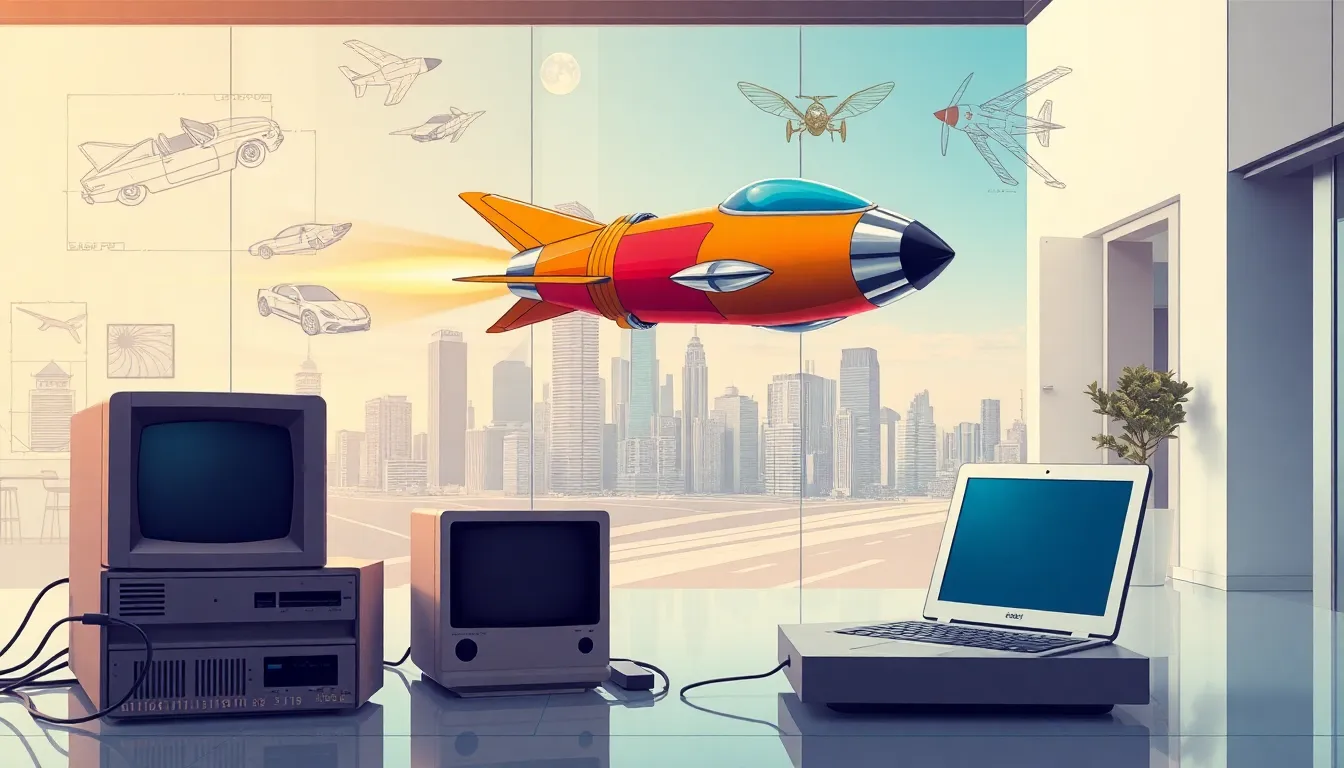
Back in the day, futurists predicted that every household would have a personal computer by the 1990s. Guess what? They were spot on. While the advent of the home computer indeed changed everything, many underestimated how these devices would evolve. From bulky monitors to sleek laptops, the transformation has been astonishing. But, who could have predicted that our little computers would lead to global connectivity, social media, and cat videos taking over our lives?
The Role of Futurists and Their Insights
Futurism in Literature and Media
Futurists have historically played a crucial role in shaping public perception of what the future holds. Often found in literature and film, their predictions reflect societal hopes and fears. Authors like Isaac Asimov and Philip K. Dick delved into the implications of technology, often with a heavy dose of caution. Their imaginative narratives not only influenced future tech but also shaped cultural anxieties about it.
Science Fiction’s Influence on Real-World Technology
The kaleidoscopic visions of science fiction have propelled countless innovations. Think of today’s tablets and smartphones, not far removed from the communicators depicted in “Star Trek.” Futurists in science fiction dare to dream and inspire real-world technologists to bring those dreams to life. Imagine how writers foresaw the internet and mobile communication, igniting aspirations that have eventually transformed our landscapes.
Predictions from Films and Television
The Impact of the Internet on Daily Life
Early movie depictions of the internet often portrayed it as a futuristic utopia, where information flows freely, and all suppers are automated. The reality, but, has turned out to be a mixed bag. Yes, the internet has revolutionized our lives, connecting us in unprecedented ways. Yet, it also exacerbates issues like misinformation and privacy invasion. Those shiny predictions sometimes overlooked the complexity of human interaction with technology.
Virtual Reality: Meeting Expectations or Falling Short?
Virtual reality promised immersive experiences that would redefine entertainment and social interactions. While VR has made strides, those overly optimistic predictions have not yet materialized into widespread adoption. The technology is still often more of a niche hobby than a daily utility. Rather than replacing our reality, it serves as an adjunct to our experiences. Although leaps have been made, the truth is more nuanced than originally envisioned.
Lessons From Past Predictions
The Nature of Prediction and Its Accuracy
Predictions often reflect more than just technological advancements: they mirror societal context and human nature. The failures teach us about the limits of foresight. The tendency to overestimate our progress is a common trait that leads to both undue excitement and disappointment. Predictions can reveal much about the circumstances of their inception, showcasing humanity’s hope amidst uncertainty.
Challenges of Foresight in a Rapidly Changing World
In an age where technology evolves at lightning speed, predicting the future brings unique challenges. Social, political, and environmental factors intertwine with technology, creating a complex web that is difficult to navigate. This fast-paced development discourages certainty and urges new approaches to forecasting. Learning from past errors could pave the way for more grounded expectations in the future.


